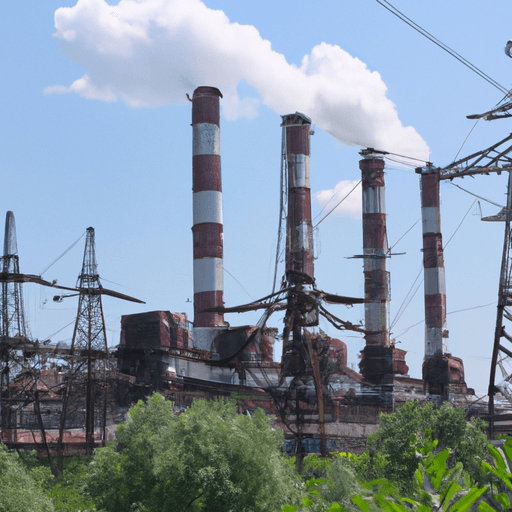
Optimal Power Plant Location in Southern California
Hard
Where is the best place to build a gas-powered plant in Southern California? You create a mathematical model using linear programming to find out.
You place a coordinate grid over a map and test each location. Each spot gets scored based on distance to cities, power loss during transmission, and environmental and property costs. An objective equation combines these factors to rank the locations.
The model shows the best spot is about 50 miles east of Lancaster. During high summer demand, two locations closer to Los Angeles also become feasible.
Hypothesis
The hypothesis is that the optimal location for a power plant will be centrally located to the major cities of Southern California, as this will have minimal line loss.
Finding the best site for a gas-powered plant in Southern California means testing dozens of locations systematically. You place a coordinate grid over a map and score each spot for distance to cities, power loss during transmission, and environmental and property costs. An objective equation then combines these factors to rank every location. That ranking reveals the best answer without the expense of building trial plants.
Choosing where to build a gas-powered plant in Southern California means juggling distance to cities, power loss during transmission, and environmental and property costs all at once. You place a coordinate grid over a map, and each spot gets scored by combining those factors into a single objective equation that ranks every candidate location. Rather than relying on intuition, the model works through every option systematically — and the result is specific: the best spot comes out about 50 miles east of Lancaster. During high summer demand, two locations closer to Los Angeles also become feasible, showing how shifts in constraints can open up new optima.
Finding the best place to build a gas-powered plant in Southern California means weighing several competing factors at once. You place a coordinate grid over a map and score each candidate location based on distance to cities, power loss during transmission, and environmental and property costs. An objective equation combines these factors to rank every spot. The model points to a location about 50 miles east of Lancaster as optimal — though during high summer demand, two locations closer to Los Angeles also become feasible. That shift shows how changing conditions can reshape which choice counts as best.
Method & Materials
You will create a set of functions in an Excel spreadsheet, place a coordinate plane over a map of Southern California, and calculate linear inequalities to represent the boundaries of the gas pipeline corridor. You will also use the distance formula to find the distance from a given node to the major cities, and weight the distances by the city populations.
You will need an Excel spreadsheet, a map of Southern California, and data on the major cities and their populations.
MEL Math — hands-on math experiment kits delivered monthly — makes abstract concepts tangible. (Affiliate link)
The mathematical model shows that the best location to construct a power plant is about 50 miles east of Lancaster. Surprisingly, the optimal locations are outside the Clean Air Zones and areas of high property costs, but still close to the population centers.
Why do this project?
This science project is unique because it uses math and linear programming to create a model that takes into account environmental and property costs, production costs, and power loss.
Also Consider
Experiment variations to consider include changing the constraints to approximate hot summer conditions, and finding locations closer to LA during periods of high demand.
Full project details
Additional information and source material for this project are available below.