

Mealworm Respiration Rate
Hard
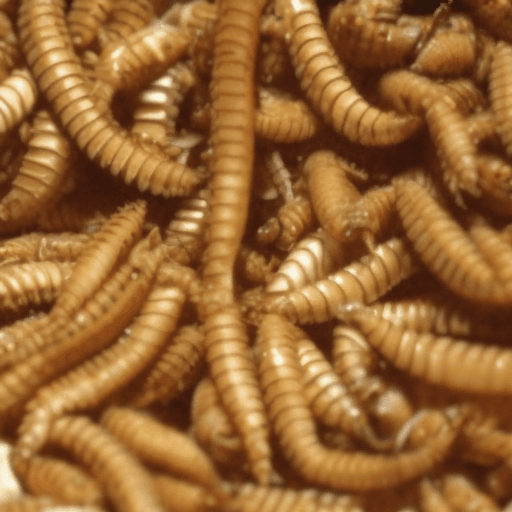
Can you watch a mealworm breathe without any high-tech equipment? You build a simple respirometer (a device that measures breathing) from a glass pipette and cotton. A drop of food coloring serves as the indicator.
Potassium hydroxide inside the tube absorbs carbon dioxide. As the mealworm uses oxygen the air volume shrinks. A tiny dye bubble at the pipette tip moves inward to fill the gap. You measure how far the bubble travels every 30 seconds for five minutes.
Using the distance and the tube's diameter you calculate how much oxygen the mealworm consumed. You can also test how temperature changes the breathing rate.
Hypothesis
The hypothesis is that the respiration rate of mealworms will increase with increased mass.
Science Concepts Learned
Cellular Respiration
You can watch a mealworm consume oxygen without any high-tech equipment. A simple respirometer built from a glass pipette and cotton does the job. Potassium hydroxide inside the tube absorbs carbon dioxide; as the mealworm uses oxygen, the air volume shrinks. A tiny dye bubble at the pipette tip moves inward to fill the gap. You measure how far the bubble travels every 30 seconds for five minutes, then use the distance and the tube's diameter to calculate how much oxygen the mealworm consumed.
Method & Materials
You will use a respirometer, potassium hydroxide, cotton, food coloring, and other materials to measure the respiration rate of mealworms.
You will need a 9" Pasteur pipette, potassium hydroxide, non-absorbent cotton, an electronic balance, a mortar and pestle, food coloring, mealworms, vaseline, masking tape, metric rulers, a Petri dish/weighing tray, forceps, and a thin wooden applicator stick.
Eureka Crate — engineering & invention kits for ages 12+ — monthly projects that build real-world skills. (Affiliate link)
See what’s includedResults
The results of this experiment showed that the respiration rate of mealworms increased with increased mass. This suggests that the larger the mealworm, the more oxygen it needs to survive.
Why do this project?
This science project is interesting and unique because it shows how to measure the respiration rate of mealworms using a respirometer and potassium hydroxide.
Also Consider
Experiment variations to consider include measuring the respiration rate of mealworms at different temperatures and measuring the respiration rate of different species of mealworms.
Full project details
Additional information and source material for this project are available below.Related video
These videos explain the science behind this project and demonstrate key concepts used in the experiment.
Share this Science Project:
Browse by Grade
Related Science Fair Project Ideas
Time roosters and hens racing to a food tray with and without a log obstacle to see which group adapts faster.
Hard
Race male and female mice through a cardboard maze, then use a T-maze to discover each mouse's paw preference.
Hard
Build a cardboard maze, send hamsters and mice through it ten times each, and discover which species learns the route faster.
Hard
Share this Science Project: