

Mouse Gender, Maze Speed, and Paw Preference
Hard
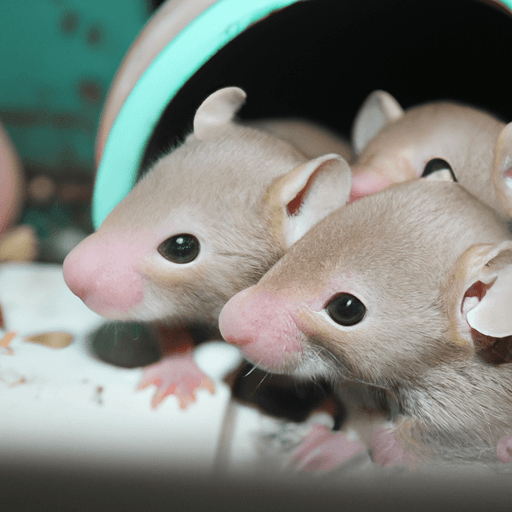
Do female mice learn a maze faster than male mice? You build two mazes from cardboard: a classic maze and a T-maze. Five male and five female mice each run the classic maze five times while you record their fastest time.
The next day, you use the T-maze to test paw preference. Each mouse chooses to turn left or right to reach a sunflower seed. You repeat the test five times per mouse.
Female mice completed the classic maze faster. They also showed a right-paw preference, while most male mice favored their left paw.
Hypothesis
The hypothesis is that female mice will learn faster than the male mice and they tend to be right-pawed.
Science Concepts Learned
Maze Learning
Biological differences within a species can shape how quickly an animal learns a maze. When five male and five female mice each ran a classic cardboard maze five times, the females recorded faster completion times. That means sex alone — with everything else held equal — can influence how fast a mouse gets better at finding its way through.
Method & Materials
You will make two mazes, a classic maze and a T-maze, and time the mice as they complete the mazes. You will also observe which paws the mice tend to use.
You will need 5 male mice, 5 female mice, a stack of cardboard or old carton boxes, a pair of scissors, a roll of masking tape, a bottle of glue, a stopwatch, and a 1 meter ruler.
Eureka Crate — engineering & invention kits for ages 12+ — monthly projects that build real-world skills. (Affiliate link)
See what’s includedResults
The results showed that the female mice completed the classic maze faster than the male mice. The female mice were right pawed while 80% of the male mice were left handed.
Why do this project?
This science project is interesting because it shows the differences in learning abilities between male and female mice.
Also Consider
Consider using hamsters instead of mice, or different kinds of mazes and feeds. What happens if the experiment is conducted in complete darkness? What if a strong scent permeates through the entire maze? How will that affect the performance of the mice?
Full project details
Additional information and source material for this project are available below.Related videos
These videos explain the science behind this project and demonstrate key concepts used in the experiment.
Share this Science Project:
Browse by Grade
Related Science Fair Project Ideas
Time roosters and hens racing to a food tray with and without a log obstacle to see which group adapts faster.
Hard
Build a cardboard maze, send hamsters and mice through it ten times each, and discover which species learns the route faster.
Hard
Release trained homing pigeons from 20 kilometers away in the morning and afternoon to see which flight is faster.
Hard
Share this Science Project: