Does sand actually block floodwater better than soil or gravel? Most people do not have sand on hand during a flood. This project tests whether common alternatives work just as well.
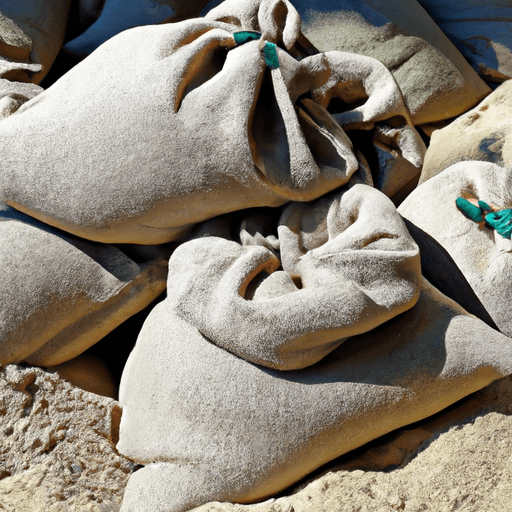
You sew small burlap bags and fill them with one of four materials. You test sand and soil. You also test fine gravel and coarse gravel. You stack six bags on a tilted flood table and pour water from the top. A bucket at the bottom collects whatever passes through.
Sand blocked the most water. Plant soil came second. Fine gravel and coarse gravel let the most water through.
Hypothesis
The hypothesis is that materials with more density will be more effective at blocking floodwaters.
Permeability determines how much water passes through a fill material. Sand blocked the most water, while fine gravel and coarse gravel let the most water through. These results show that tightly packed grains lower permeability and stop more flow.
Particle size affects how well a material blocks water. In a flood-table test comparing four fill materials, sand blocked the most water, while fine gravel and coarse gravel let the most water through. The smaller grains of sand held back more water than the larger grains of gravel.
Does sand actually block floodwater better than soil or gravel? This project puts that question to a direct test. You sew small burlap bags, fill them with one of four materials, then stack six bags on a tilted flood table and pour water from the top. A bucket at the bottom collects whatever passes through, giving you a clear measure of how well each material holds back water.
Method & Materials
You will make sandbags, set up a flood table, and measure how much water goes past the sandbags.
You will need burlap, sand, plant soil, fine gravel, course gravel, a flood table, a marking pen, bottles, a bucket, a sewing machine, a stop-watch, a paint bucket, and a measuring device.
Tinker Crate — science & engineering build kits for ages 9–12 — real tools, real experiments, delivered monthly. (Affiliate link)
The results showed that sand let the least amount of water past through the sandbags, an average of 848 milliliters of water in 25 seconds. Plant soil, the next best material, let 1,360 milliliters of water past through them. Then came fine gravel. It let through 1,439 milliliters. The material that let through the least amount of water was coarse gravel. It only held back 1,912 milliliters.
Why do this project?
This science project is interesting because it tests materials that are not usually used in sandbags to stop floods. It also provides useful information that can help people prepare for floods and save their lives.
Also Consider
Variations to consider include testing different materials such as clay, sawdust, wood chips, etc. and running a more accurate flood, making bigger sandbags, making a more waterproof flood table, running the test longer, and making sure that all sandbags are the exact same size.
Full project details
Additional information and source material for this project are available below.