Search for Science Fair Projects

1000 Science Fair Projects with Complete Instructions

Bacteriology Science Fair Project

Bacteria Growth in Reused Water Bottles
Hard
Bacteria Growth in Reused Water Bottles | Science Fair Projects | STEM Projects
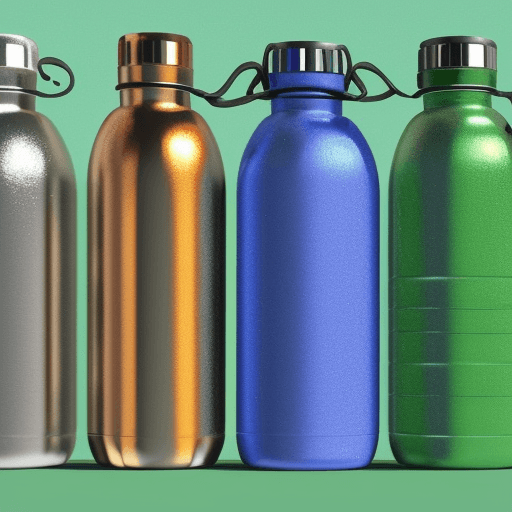
Does bacteria build up in a water bottle you refill without washing? Many people reuse disposable bottles for days. You can measure what grows inside. Give five test subjects each a labeled water bottle. Have them drink all the water during the day. Refill the bottles the next morning without washing them. Repeat for three days. Keep one unopened bottle as a control. Filter water samples through Nalgene filtration units. Place the filters in petri dishes with melted BHI agar. Incubate for 24 hours and count the colonies. In one trial, some bottles showed bacterial growth thousands of times above the control.

Hypothesis

The hypothesis is that bacteria will increase in a water bottle when it is not washed between uses.

Science Concepts Learned

Agar Plate Culture

Agar plate culture grows germs on a jelly-like food inside a flat dish, which lets you count how many live in a sample. This project melts BHI agar into petri dishes and places filters from water bottle samples onto that jelly food. After a day in the incubator, each colony on the dish marks germs that fed and grew on the agar.

Bacterial Growth

An unwashed water bottle gives germs exactly what they need: food, warmth, and moisture. This project tests that by having five subjects refill their bottles each morning for three days without washing them. One unopened bottle serves as a control. After filtering water samples and incubating them on BHI agar for 24 hours, you count the colonies. In one trial, some bottles showed bacterial growth thousands of times above the control.

Bacterial Colony Counting

Invisible germs become numbers you can compare once they grow into colonies on a plate. In this experiment, test subjects carry labeled water bottles for three days, refilling them each morning without washing. On day three, you filter water samples through Nalgene filtration units, place the filters in petri dishes with melted BHI agar, and incubate for 24 hours. An unwashed bottle can show colony counts thousands of times higher than the sealed control.

Bacterial Contamination

Bacterial contamination happens when harmful germs get into water and make it unsafe to drink. In this project, you refill disposable water bottles for three days without washing them, then filter the water and count bacteria colonies on agar. One trial showed bacterial growth thousands of times above the control bottle.

Biofilm

Biofilm is a slimy layer of germs that cling to wet surfaces and grow together. A refilled water bottle is a perfect home for one. The inside stays wet for days. In this project, you refill bottles for three days without washing, then count what grew. One trial showed growth thousands of times above the control.

Aseptic Technique

An autoclave sterilizes the equipment before any sample touches it, so no stray germs ride in on your tools. When transferring each filter, a sterile scalpel and disposable inoculating loops keep outside bacteria from sneaking in. Any colonies that grow on the BHI agar then came from the reused water bottles — not from dirty gear.

Method & Materials

You will mark five water bottles with individual test subjects' names, one water bottle as a control, and give each test subject their water bottle in the morning. On the second day, you will refill the test subject's water bottle with water from new water bottles and give them back to the test subjects. On the third day, you will take the five water bottles used by the individual test subjects and the water bottle marked “control” to the lab for testing.
You will need 16 Kirkland brand water bottles, 16.9 fl.oz. (0.5 L), a Sharpie marker pen, 6 Gallon size Ziploc bags, 1 Roll paper towels, 12 Vials BHI agar slants, 10 ml. each, 1 Metal container to melt BHI agar in, 1 Bunsen burner, 6 Nalgene filtration units.  (115 ml capacity), 1 Pair of hot pad gloves, 1 Trivet , 1 Vacuum to filter the water, 6 Petri dishes, 1 Sterile scalpel, 1 Pair of forceps, 6 Disposable inoculating loops, 1 Incubator to incubate the bacteria, and 1 Autoclave.

Eureka Crateengineering & invention kits for ages 12+ — monthly projects that build real-world skills. (Affiliate link)

See whats included

Results

The results of this experiment showed that the bacterial content in water bottles does increase when you simply re-fill your water bottle without washing it prior to re-filling it. Test subjects 1, 2, and 3 all had a high amount of bacteria colonies present compared to the control. Test subjects number and 4 and 5 had results that were significantly lower than the three other test subjects but there still was bacterial growth compared to the control sample.

Why do this project?

This science project is interesting because it shows how quickly bacteria can grow in a water bottle when it is not washed between uses. It also shows how important it is to wash your water bottle between uses to prevent bacteria growth.

Also Consider

Variations to consider include testing different types of water bottles and testing different types of liquids in the water bottle.

Full project details

Additional information and source material for this project are available below.

Related video

These videos explain the science behind this project and demonstrate key concepts used in the experiment.
This news station did a similar experiment, but the results would have been more solid if they included controls. What control would you add?
Share this Science Project:

Related Science Fair Project Ideas

Antibacterial vs. Regular Soap
Grow bacteria from four differently washed chopsticks on blood agar and find out how long antibacterial soap really needs to work.
Hard
Garlic Extract and Bacterial Growth
Add garlic extract to E. coli in a petri dish and track whether the bacteria can grow at all over five days.
Hard
Baby Food and Bacteria Growth Over Time
Open three types of baby food, leave them out for different lengths of time, and measure which one grows the most bacteria.
Hard
Share this Science Project: