Search for Science Fair Projects

1000 Science Fair Projects with Complete Instructions

Water Pollution Science Fair Project

Rural Creek vs. Urban Creek: Water Quality Compared
Medium
Rural Creek vs. Urban Creek: Water Quality Compared | Science Fair Projects | STEM Projects
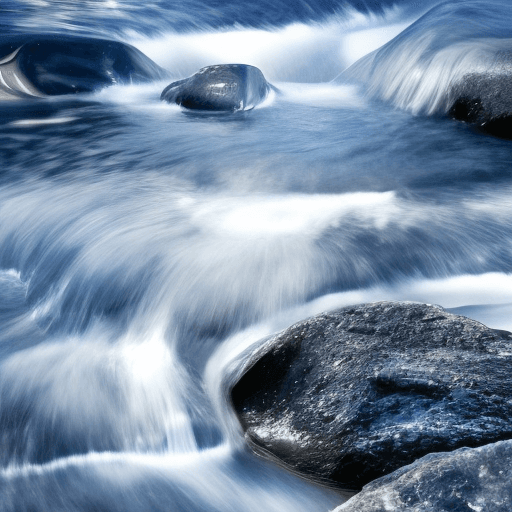
Does a creek near homes and farms carry more chemicals than one flowing through open rangeland? Umptanum Creek and Wenas Creek both start from the same snowpack. Both feed into the Yakima River. One passes through rural land. The other flows through a more developed area. You collect water samples from each creek and test for: - nitrates - turbidity (cloudiness) - suspended sediment Wenas Creek had higher nitrate and turbidity levels. Umptanum Creek had more suspended sediment. Human activity appears to raise certain chemical levels in nearby waterways.

Hypothesis

The hypothesis is that the chemical levels will be lower in undeveloped Umptanum Creek rather than the more developed Wenas Creek.

Science Concepts Learned

Sedimentation

Gravity pulls solid particles out of flowing water, letting them collect on the bottom — that process is sedimentation. In this project, you compare suspended sediment in Umptanum Creek and Wenas Creek using an Imhoff cone. You let water from each creek sit still inside the cone so particles settle downward, revealing how much solid material each waterway carries.

Nitrate

Nitrate is a nitrogen compound that dissolves in water and feeds plant growth. When farms and homes sit near a creek, fertilizer and waste wash into the flow and raise nitrate levels. Wenas Creek passes through more developed land; Umptanum Creek flows through open rangeland. Both start from the same snowpack and feed into the Yakima River — yet when you test each for nitrates, turbidity, and suspended sediment, the readings diverge. Wenas shows higher nitrate and turbidity levels, while Umptanum carries more suspended sediment. That pattern points to human land use as the source of extra nitrogen in nearby waterways.

Runoff

Rain and snowmelt flowing over land pick up substances from the ground before reaching waterways. This project compares two creeks — Umptanum and Wenas — that both start from the same snowpack and feed into the Yakima River. Wenas Creek passes through more developed land; Umptanum flows through open rangeland. Water samples from each are tested for nitrates, turbidity, and suspended sediment. Wenas Creek showed higher nitrate and turbidity levels, while Umptanum had more suspended sediment. That difference suggests human activity raises certain chemical levels in the waterways nearby.

Turbidity

Rain washes soil, fertilizer, and fine debris off nearby land and into creeks and rivers. When you measure that cloudiness with a turbidimeter, the reading reflects how many tiny particles are floating in the water. Wenas Creek, which flows through a more developed area, showed higher turbidity and nitrate levels than Umptanum Creek — suggesting that human activity raises the particle load in nearby waterways.

Method & Materials

You will take two .5 liter Depth and Width Integrated Samples from each creek, test sediment with a one liter Imhoff cone, and measure turbidity with a turbidimeter.
You will need a thermometer, two pairs of waders or hip boots, a liter of distilled water, a turbidimeter, a one liter Imhoff cone, and a nitrate test kit.

Eureka Crateengineering & invention kits for ages 12+ — monthly projects that build real-world skills. (Affiliate link)

See whats included

Results

The results of the experiment showed that Wenas Creek had higher levels of turbidity and nitrates, but Umptanum Creek had more suspended sediment. This suggests that humans have an effect on the Wenas Creek but do not have much of an effect on the Umptanum Creek.

Why do this project?

This science project is interesting because it looks at the effects of development on water quality in two creeks flowing from the same snowpack.

Also Consider

Variations of this experiment could include testing more than two tributaries, testing over a period of time, and testing at least once a month to see if certain chemicals being used during that time would affect the water quality more than other chemicals.

Full project details

Additional information and source material for this project are available below.

Related video

These videos explain the science behind this project and demonstrate key concepts used in the experiment.
Share this Science Project:

Related Science Fair Project Ideas

Water Acidity and Guppy Survival
Place guppies in five tanks at different acid levels and track survival every two hours to find the tipping point.
Medium
Denitrifying Bacteria and Nitrate Removal
Add denitrifying bacteria to pond water and track whether nitrate levels drop faster than in untreated samples over three weeks.
Medium
Boatyard Runoff and Heavy Metal Pollution
Collect water from a boatyard, marina, beach, and tap, then send all four to a lab to compare heavy metal levels.
Medium
Share this Science Project: