

Cricket Chirps as a Thermometer
Hard
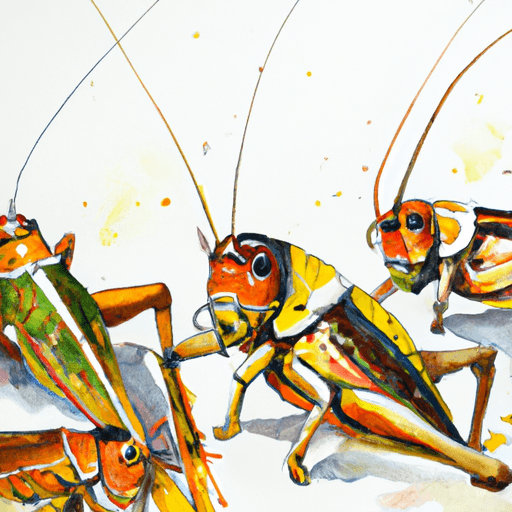
You have probably heard crickets chirp faster on a warm night. The snowy tree cricket chirps at a rate so steady that you can use it to estimate the temperature outside.
Count the chirps over 13 seconds and add 40. The result is close to the temperature in degrees Fahrenheit. You record chirps at several temperatures and graph the pattern.
This relationship follows the Arrhenius equation, a formula that links temperature to reaction speed. The cricket's muscles work faster in warmth, producing more chirps per second.
Hypothesis
The hypothesis is that the rate of chirping of the snowy tree cricket is affected by temperature.
Science Concepts Learned
Arrhenius Equation
The Arrhenius equation is a formula that links temperature to reaction speed, and living organisms demonstrate this relationship clearly. A cricket's muscles work faster in warmth, producing more chirps per second, so the rate of chirping of the snowy tree cricket is affected by temperature. You can count the chirps over 13 seconds and add 40 to estimate the temperature in degrees Fahrenheit.
Method & Materials
You will record the chirps of the cricket at different temperatures and use the Arrhenius equation to determine the rate of chirping.
You will need a recording device, a thermometer, and a snowy tree cricket.
Eureka Crate — engineering & invention kits for ages 12+ — monthly projects that build real-world skills. (Affiliate link)
See what’s includedResults
The results of this experiment show that the rate of chirping of the snowy tree cricket is affected by temperature. The rate of chirping increases as the temperature increases.
Why do this project?
This science project is interesting and unique because it uses a natural phenomenon - the chirping of a cricket - to measure temperature.
Also Consider
Experiment variations to consider include testing different species of crickets and testing the effect of humidity on the chirp rate.
Full project details
Additional information and source material for this project are available below.Related video
These videos explain the science behind this project and demonstrate key concepts used in the experiment.
Share this Science Project:
Related Science Fair Project Ideas
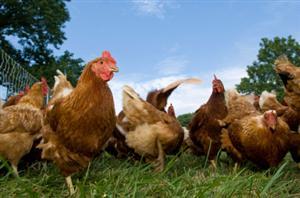
Time roosters and hens racing to a food tray with and without a log obstacle to see which group adapts faster.
Hard
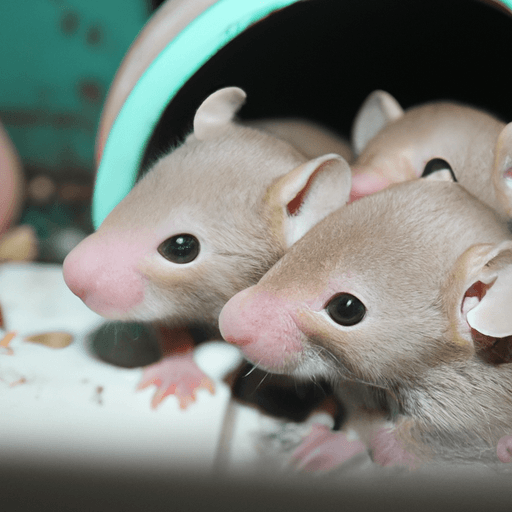
Race male and female mice through a cardboard maze, then use a T-maze to discover each mouse's paw preference.
Hard
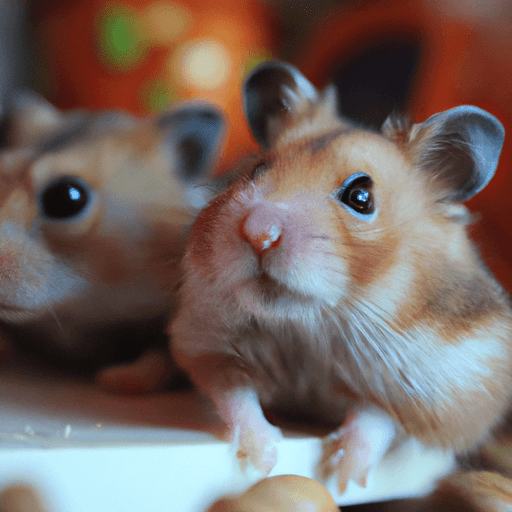
Build a cardboard maze, send hamsters and mice through it ten times each, and discover which species learns the route faster.
Hard
Share this Science Project: