Introduction to Acids and Bases
Strong and Weak Acids and Bases
In acid-base chemistry, we encounter both strong and weak acids and bases.
Hydrochloric acid and sulfuric acid are examples of strong acids. These acids dissociate completely in water, releasing a high concentration of hydrogen ions. On the other hand, acetic acid (vinegar) and citric acid (found in citrus fruits) are weak acids. They only partially dissociate, resulting in a lower concentration of hydrogen ions.
Sodium hydroxide is a strong base, readily dissociating in water and releasing a high concentration of hydroxide ions (OH-). In contrast, a weak base like ammonia has a lower concentration of hydroxide ions.
pH Scale
What is pH? pH is an abbreviation for "potential of Hydrogen," and it's a measure of the acidity or alkalinity of a solution.
The pH scale represents a solution's concentration of hydrogen ions (H+), with lower numbers indicating higher acidity and higher numbers signifying higher alkalinity. The scale ranges from 0 to 14, where 0 represents the highest acidity, 7 is neutral, and 14 indicates the highest alkalinity. Acids have a pH below 7, with strong acids typically falling between 0 and 3. Conversely, bases have a pH above 7, and strong bases typically range from 10 to 14.
Measuring pH
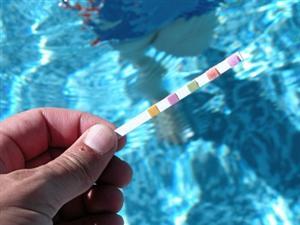
The most common way for measuring pH is using pH strips. The solution to be tested is dripped onto the pH strip or the strip is dipped into the solution, causing a color change to the strip. To find out the pH value, the resulting color is matched against a color chart that displays the corresponding pH range.
For more precise and accurate pH measurement, pH meters are utilized. These meters are calibrated using buffers of known pH and are immersed into the solution being tested. The pH value is conveniently displayed on a digital meter, ensuring a reliable reading.
When an acid and a base react, they undergo a process called acid-base neutralization. During this reaction, the acid donates a proton (H+) to the base, forming water (H2O) and a salt as products. This reaction balances acidity and basicity, achieving a state of equilibrium.
For example, when hydrochloric acid (HCl) reacts with sodium hydroxide (NaOH), they combine to form water (H2O) and sodium chloride (NaCl). HCl + NaOH → H2O + NaCl
A common neutralization reaction is that between vinegar (acetic acid) and baking soda (sodium bicarbonate), which forms carbon dioxide gas, water and sodium acetate. NaHCO3 + HC2H3O2 → CO2 + H2O + NaC2H3O2
Buffer Acid-Base Reactions
A buffer solution plays a crucial role in maintaining pH stability by resisting big changes towards becoming acidic or basic. It is composed of a combination of a weak acid and its conjugate base or a weak base and its conjugate acid. This specific combination allows the buffer to effectively absorb or release hydrogen ions (H+) in response to what's added to the solution. When an acid or base is added to the buffer, the weak acid-base pair present in the buffer system reacts to neutralize the added ions, preventing drastic shifts in pH. By providing a constant pH, the buffer solution is an essential component in various chemical reactions and biological processes.
The Arrhenius Theory of Acids and Bases in Aqueous Solutions
The Arrhenius theory, proposed by Svante Arrhenius, provides a foundational understanding of acids and bases. According to this theory, acids are substances that release hydrogen ions (H+) when dissolved in water, while bases release hydroxide ions (OH-). Acids increase the concentration of hydrogen ions, resulting in higher acidity, while bases increase the concentration of hydroxide ions, leading to alkalinity. The Arrhenius theory helps us understand acid-base reactions in aqueous solution.
The Brønsted-Lowry Theory of Acids and Bases and Proton Transfer
The Brønsted-Lowry theory, formulated by Johannes Nicolaus Brønsted and Thomas Martin Lowry, expands the definition of acids and bases beyond aqueous solutions. In this theory, an acid is a substance that donates a proton (H+), while a base is a substance that accepts a proton. The focus shifts from the dissociation of ions to proton transfer. When an acid donates a proton to a base, it forms a conjugate base, while the base becomes a conjugate acid.
The Lewis Theory of Acids and Bases and Electron Pair Donation
The Lewis theory of acids and bases, proposed by Gilbert N. Lewis, focuses on electron pair donation. According to this theory, acids are substances that accept electron pairs, while bases are substances that donate electron pairs. This theory extends our understanding of acid-base reactions beyond proton transfer and includes reactions involving non-aqueous solutions and gases.
Acids and bases play essential roles in countless chemical reactions and natural phenomena. From the sour taste of citrus fruits to the digestion of food in our stomachs, acid-base chemistry surrounds us. After understanding the properties, behavior, and theories of acids and bases, try your hand at acid-base chemical reaction science projects!
Browse Acid and Bases Science Fair Projects
Learn more about acids and bases with these science projects that have complete instructions based on the scientific method with accompanying videos!













 Explore how water plays a vital role in plants, discover the special properties that make water unique and do fun chemical reactions with water! Dive in and discover the fascinating world of water! Browse water projects.
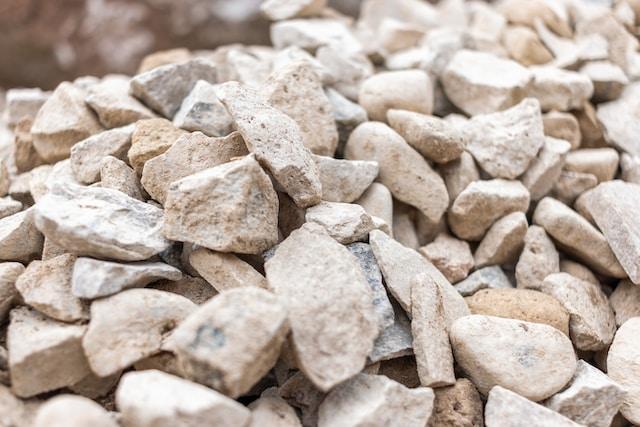
 Learn all about rocks, minerals & crystals with our lesson & science projects: rock cycle, sedimentary rocks, metamorphic rocks, igneous rocks. Browse rock projects.
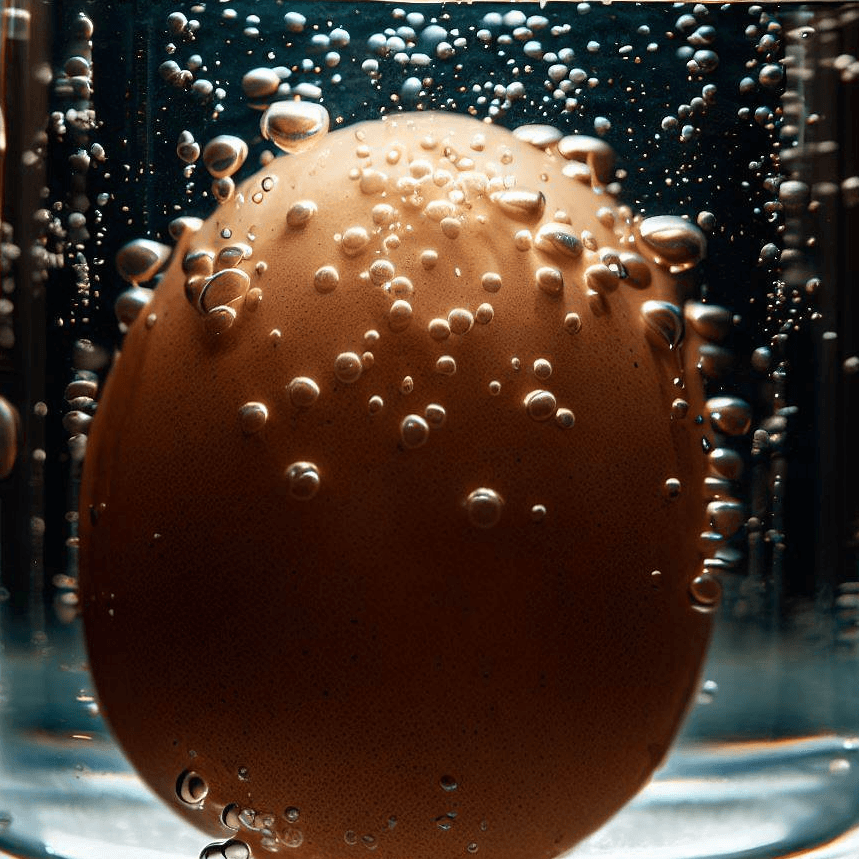
 Get ready to crack open a world of egg-citement with these incredible egg projects ranging from chemistry to engineering experiments! Browse egg projects.
 Explore the wonder and excitement of these STEM projects! Each of these only need a few items you may have at home, so it's an easy and fun way to teach kids about STEM! Browse STEM projects.
 Biology is the study of living things and how they work. Browse biology projects
 Chemistry is the study of matter, which is everything around us! Explore different chemical reactions in these science projects! Browse chemistry projects.
 Physics is the study of how the universe works. Discover the forces and motions that give rise to volcanic eruptions! Browse physics projects.
 Engineering is all about solving problems using science and math. Browse engineering projects.